FIGURATIVE, HISTORICAL AND NATURAL STUDIES Distinct sculptural studies extending Aeromorphism toward boundary, native, archaic, exploratory, heroic and disciplined forms.
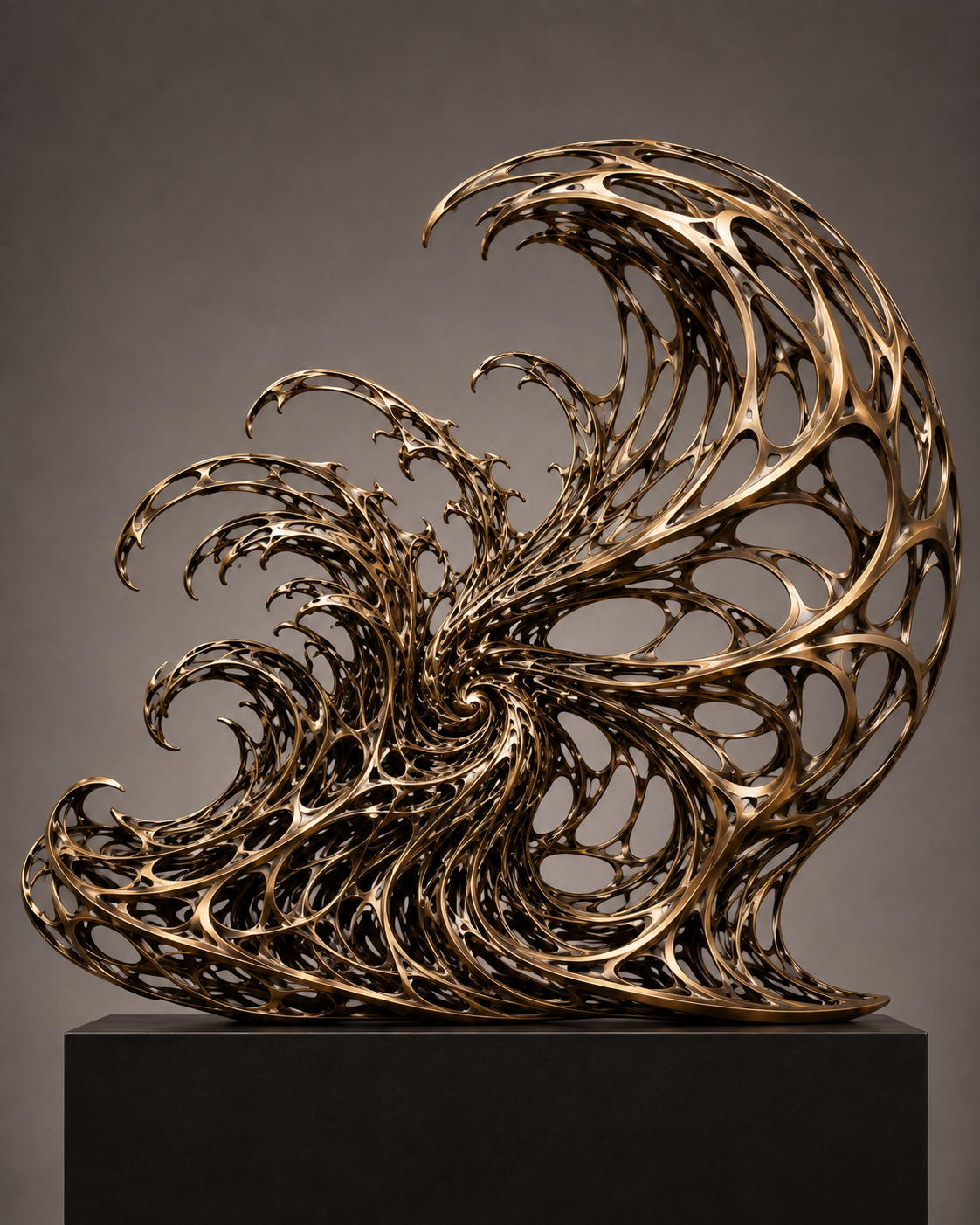
Sea and Ocean — Boundary Form Sea and Ocean — Boundary Form, 2026. Sculptural Study — Aeromorfizm, 2026 Daniel Nowicki Creator of Aeromorphism © 2026 Daniel Nowicki. All rights reserved. This is not an illustration of a single wave, but a record of the instant in which two different orders of water enter one another. The smaller rhythm of the sea is seized by the ocean’s vast energy, while the place of their encounter turns into a vortex of tension. Metal marks the directions of flow; air becomes foam, depth, and invisible pressure.
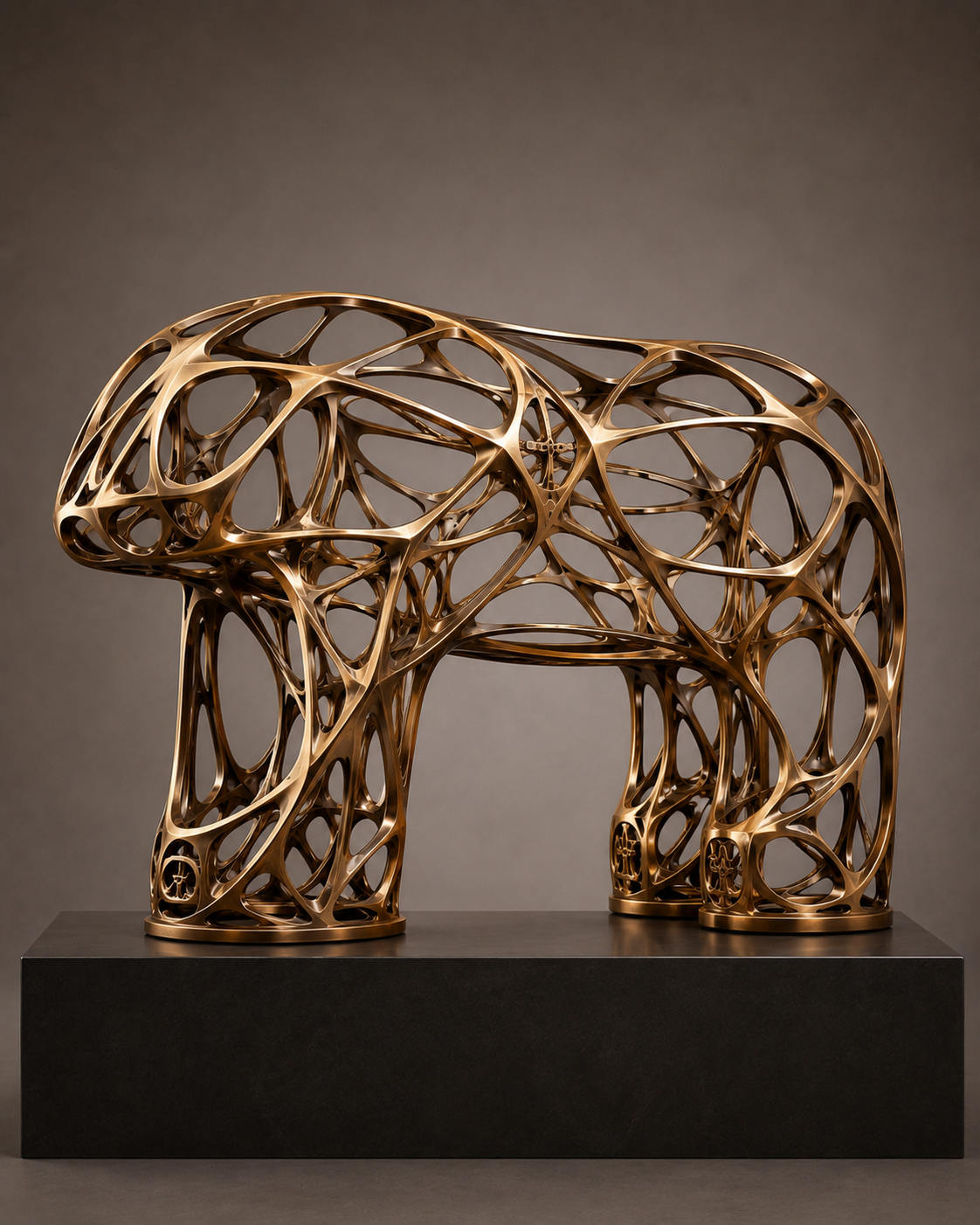
The Bear of Ślęża — Archaic Form The Bear of Ślęża — Archaic Form, 2026. Sculptural Study — Aeromorfizm, 2026 Daniel Nowicki Creator of Aeromorphism © 2026 Daniel Nowicki. All rights reserved. The form refers to the stone Bear of Ślęża, preserving its compact, almost anonymous silhouette rather than the naturalistic anatomy of an animal. The primordial mass is opened and transformed into a system of load-bearing ribs. Emptiness does not diminish the object’s symbolic weight—it reveals the memory of the place, which cannot be contained within a single interpretation.
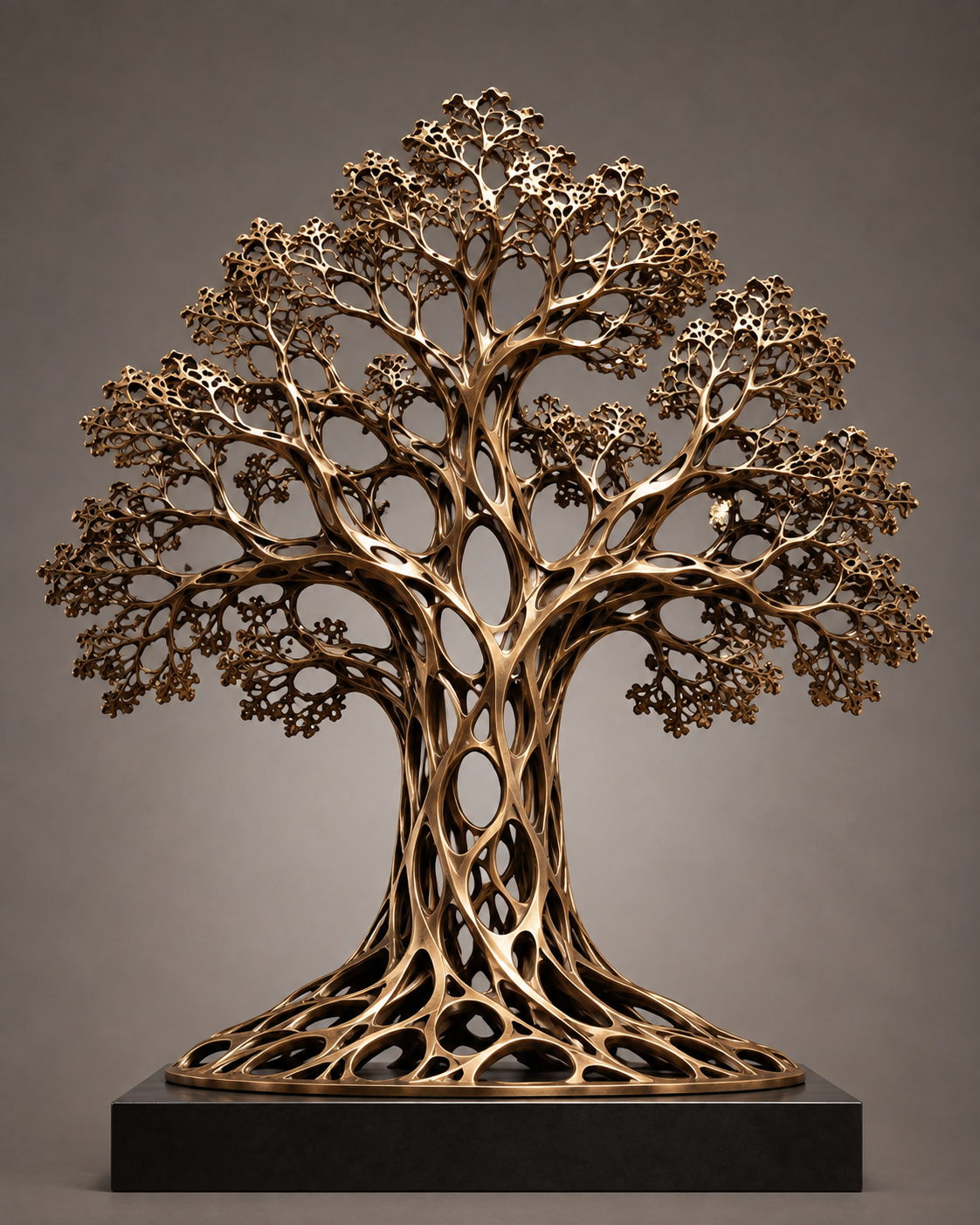
The Great Polish Oak — Native Form The Great Polish Oak — Native Form, 2026. Sculptural Study — Aeromorfizm, 2026 Daniel Nowicki Creator of Aeromorphism © 2026 Daniel Nowicki. All rights reserved. The monumental oak is built not from a solid trunk and crown, but from a continuity of roots, ribs, and branching openings. It is a native form: rooted, resilient, and open to the passage of light. Air permeates the tree like the memory of generations, while roots and branches become a single system of endurance.
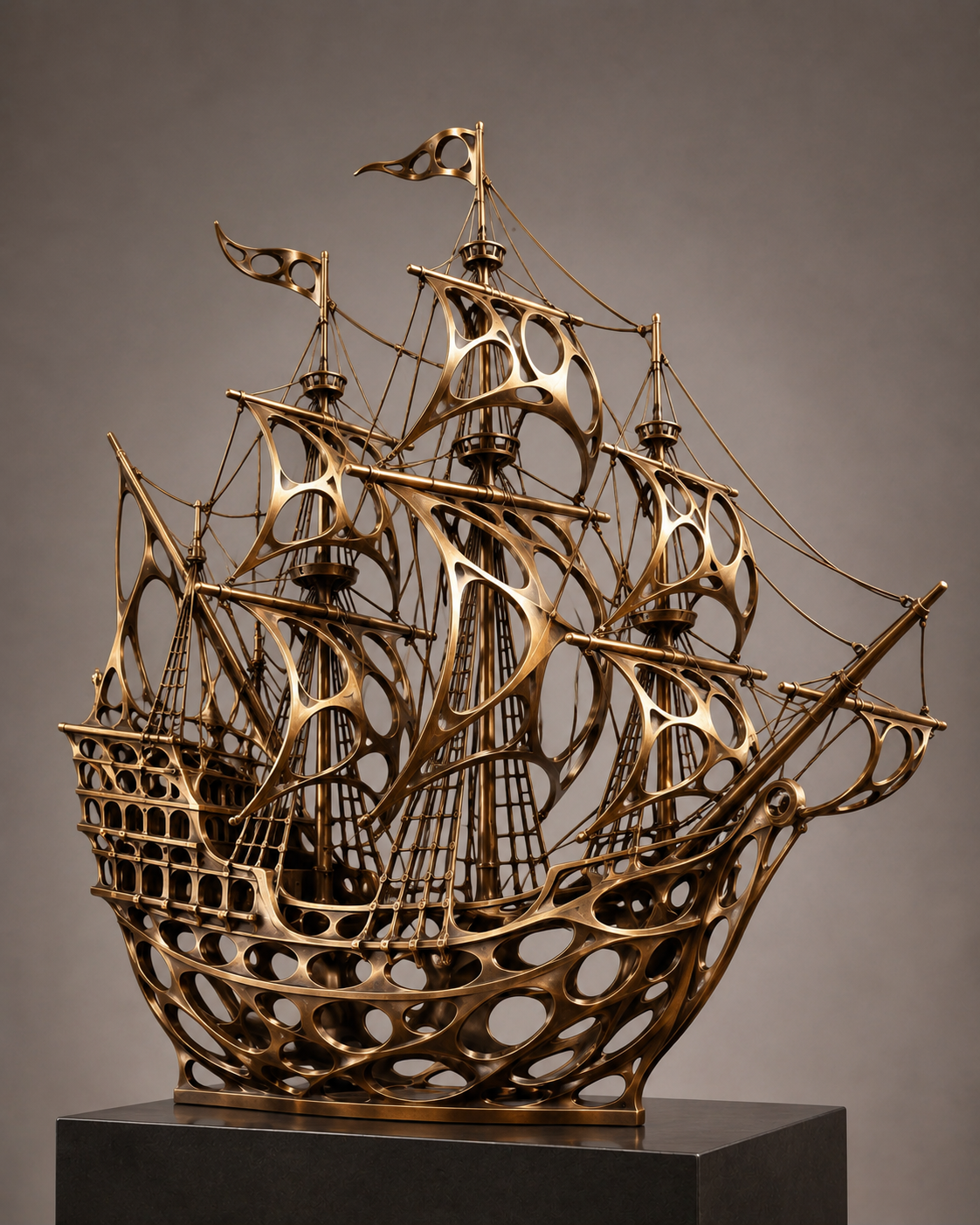
Sixteenth-Century Galleon — Exploratory Form Sixteenth-Century Galleon — Exploratory Form, 2026. Sculptural Study — Aeromorfizm, 2026 Daniel Nowicki Creator of Aeromorphism © 2026 Daniel Nowicki. All rights reserved. The sixteenth-century galleon is shown as a structure carried by what cannot be cast: wind. The openwork hull, masts, and sails form a spatial record of tensions between the ship’s weight and the force of air. Empty sails do not signify absence; it is precisely the invisible pressure that gives the entire form its direction and the voyage its meaning.
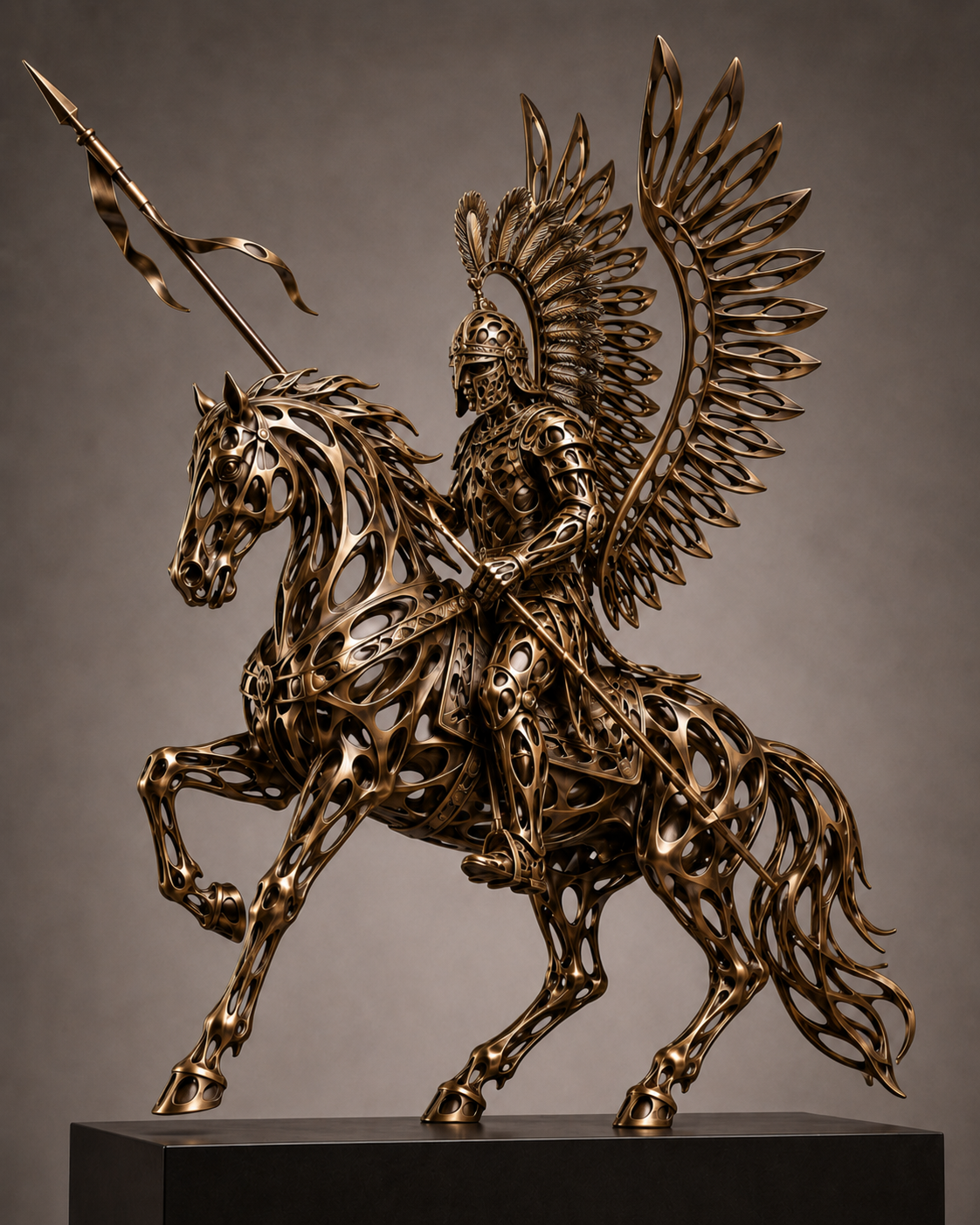
Winged Hussar — Heroic Form Winged Hussar — Heroic Form, 2026. Sculptural Study — Aeromorfizm, 2026 Daniel Nowicki Creator of Aeromorphism © 2026 Daniel Nowicki. All rights reserved. Rider, horse, wings, and lance merge into a single impulse of motion. The openwork armour does not weaken the hussar; it turns his mass into tension, speed, and air cut by the charge. The historical silhouette remains legible, but its interior belongs to imagination—between the metal lines arises an image of a force greater than matter itself.
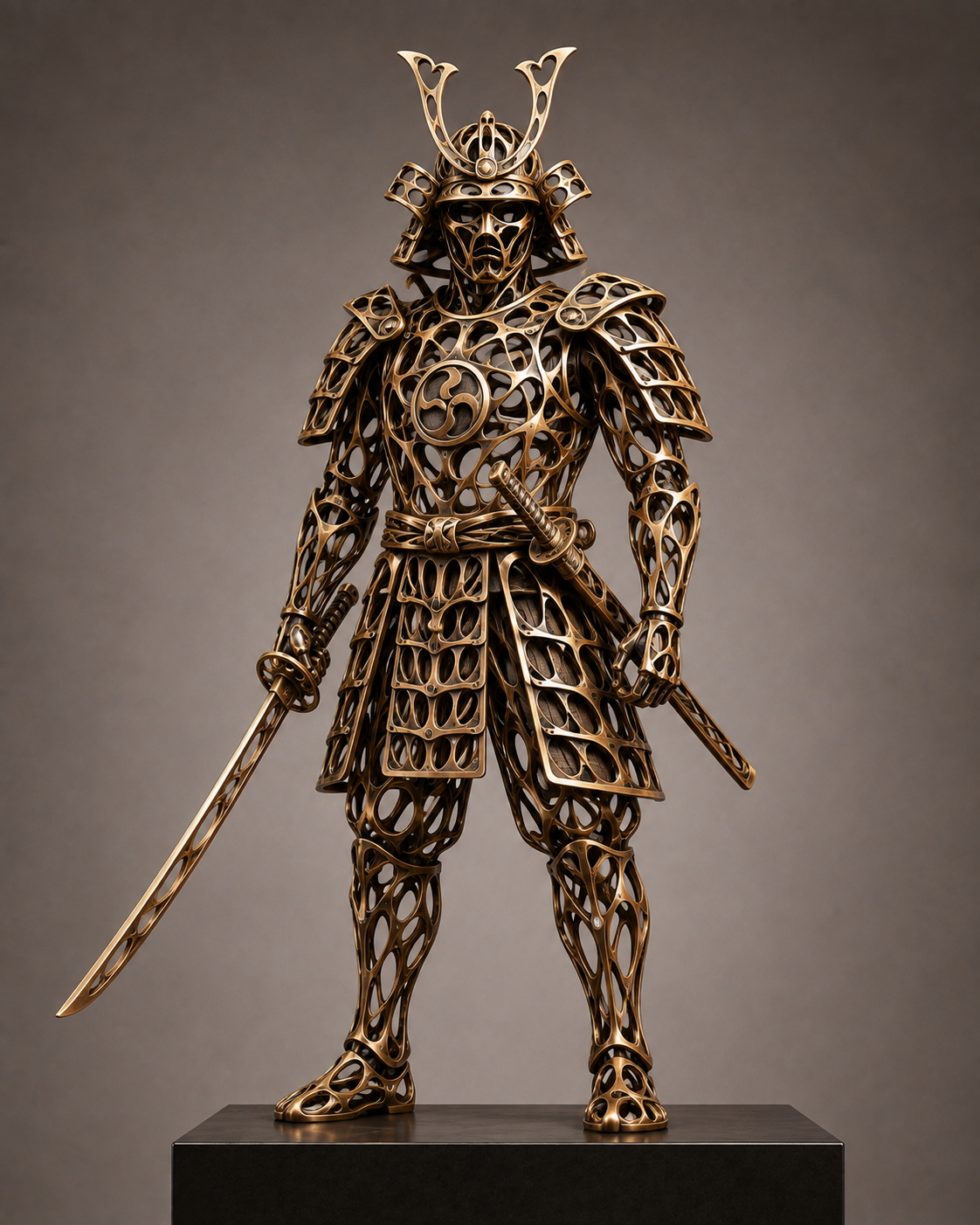
Samurai — Form of Discipline Samurai — Form of Discipline, 2026. Sculptural Study — Aeromorfizm, 2026 Daniel Nowicki Creator of Aeromorphism © 2026 Daniel Nowicki. All rights reserved. The samurai is not captured at the instant of attack, but in a state of complete readiness. Layered armour, kabuto, and sword form a disciplined order of lines in which every void is as important as the metal. The form does not speak of violence but of control: energy held immediately before movement, and the silence that precedes a decision.
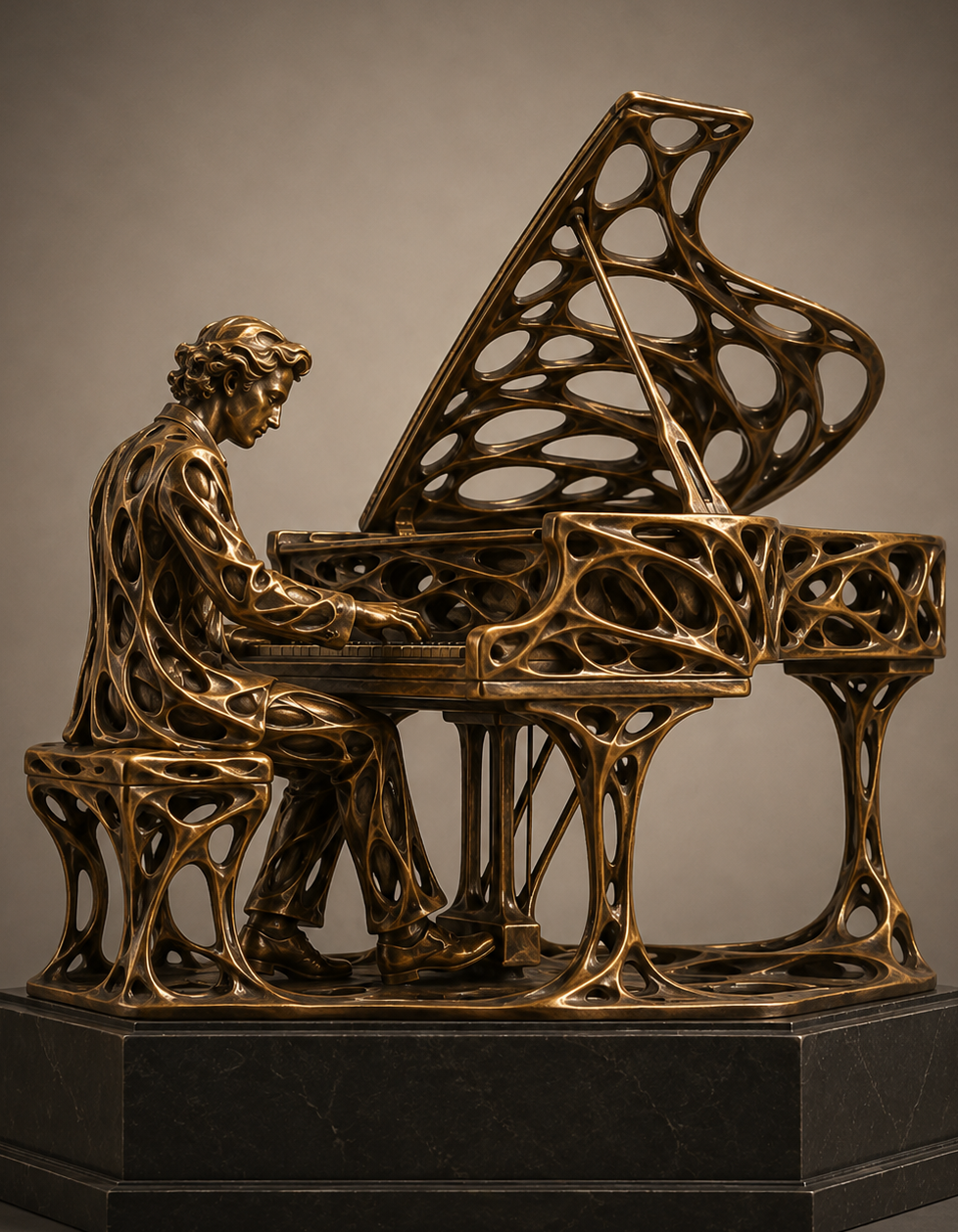
Pianist — Resonance Form Pianist — Resonance Form, 2026. Sculptural Study — Aeromorfizm, 2026 Daniel Nowicki Creator of Aeromorphism © 2026 Daniel Nowicki. All rights reserved. The pianist and the grand piano merge into a single system of resonance. The openwork material does not enclose either the instrument or the figure within a solid mass; it leaves space for sound, movement, and imagination. Metal defines only the structure of the event, while the air between its lines becomes the invisible carrier of music. Human, instrument, and void form a single structure suspended between gesture and sound.
Calm Calm, 2026. Conceptual visualization. Sculptural Study — Aeromorfizm, 2026 Daniel Nowicki Creator of Aeromorphism © 2026 Daniel Nowicki. All rights reserved. The sculpture presents a state of stillness enclosed within an openwork form. The seated figure is not cut off from its surroundings, but sheltered by a fluid, organic structure that creates a kind of spatial refuge above it. Metal defines only the boundaries of presence, while the air passing through the sculpture gives it its deepest meaning. “Calm” does not signify immobility, but a state of inner balance in which form, silence, and space remain in harmony.